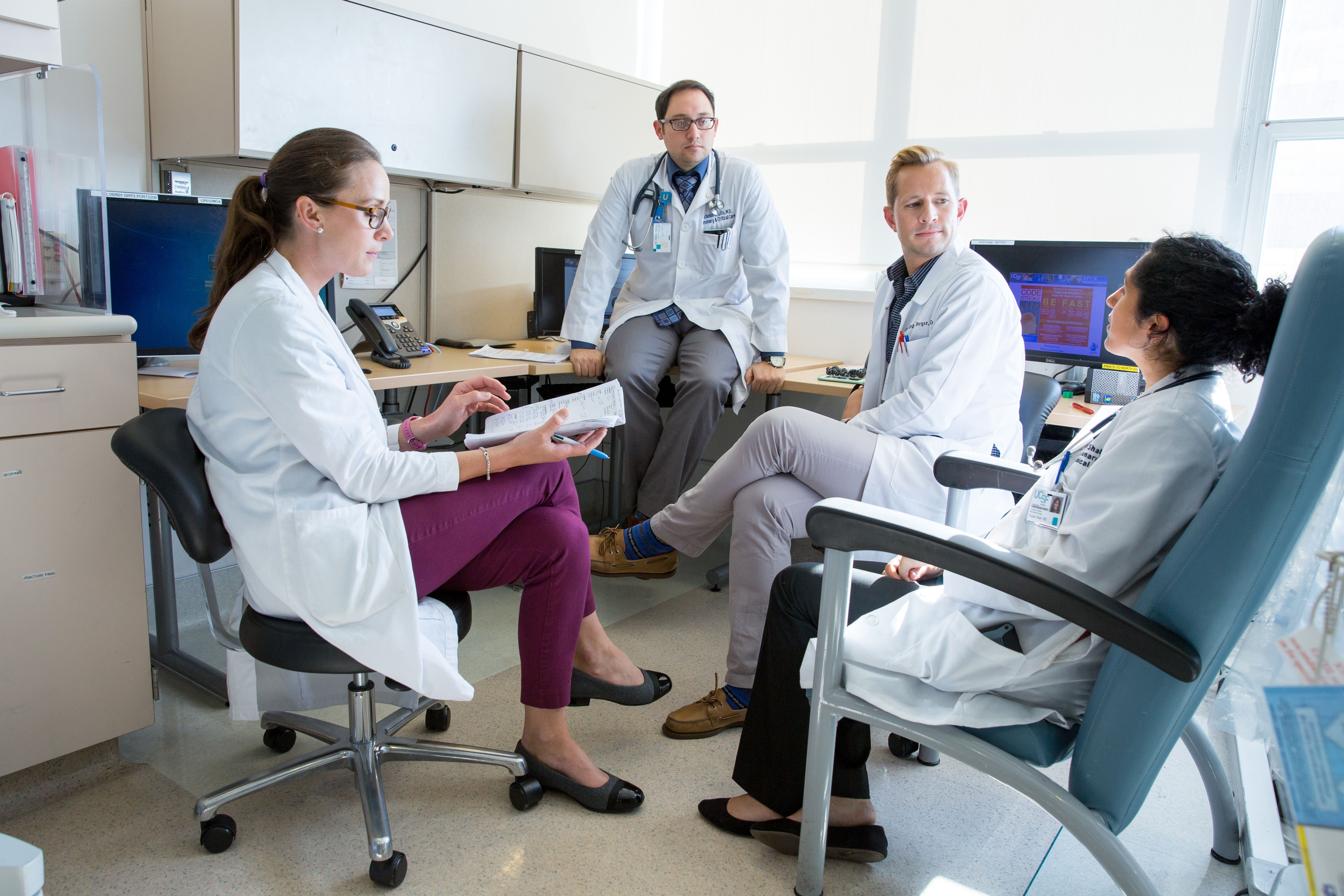
The mission of the Pulmonary, Critical Care, Allergy and Sleep Medicine Division is to be a leader in the provision of comprehensive medical care to patients with pulmonary disease, critical illness, allergic diseases and sleep disorders,to be an engine for innovative research aimed at elucidating basic mechanisms of disease, to translate our research activities into new clinical initiatives, and to provide a rich training environment for the next generation of international leaders in basic, translational and clinical research.
The Division is based at three hospital sites, each of which emphasizes different aspects of care for patients with lung disease. We are also closely affiliated with the Cardiovascular Research Institute, the UCSF Biomedical Sciences andImmunology Programs and the Lung Biology Center. The 56 Division faculty have diverse interests and expertise . This Web site highlights these important elements of the Division and is intended to facilitate communication and information access for patients, practicing physicians, scientists, and trainees interested in a career in pulmonary, critical care, allergy and sleep medicine.
Our Division has a long history of providing outstanding clinical care, performing innovative research and training academic scientists and physicians. We currently have active, well-funded clinical, translational and basic research programs in lung development, international lung health, pulmonary immunology, genetics of pulmonary and allergic diseases, lung transplantation, microbial pathogenesis, airway diseases, acute lung injury, pulmonary fibrosis, pulmonary malignancies and pulmonary health disparities. Our large, NIH training grant has been continuously funded since 1966. We have trained more than 200 pulmonary scientists who currently hold full-time academic positions at Universities around the world, including more than 100 trainees who currently hold the rank of full professor. Nearly a quarter of all academic pulmonologists in the United States have trained at UCSF.
In addition to more than $10 million of annual research funding from the National Institutes of Health, the division has a current endowment of more than $60 million, which gives us great flexibility to move in new directions and support trainees and faculty even in the face of external economic uncertainty.